Buyer Guides · Specifications
Ceramic Planter RFQ Checklist: Specifications Buyers Should Prepare
A useful request for quotation (RFQ) explains what you want to develop, how it will be used and where it needs to arrive. Prepare the following information for each design. If a detail is undecided, identify it as a question for review rather than treating it as an agreed specification.
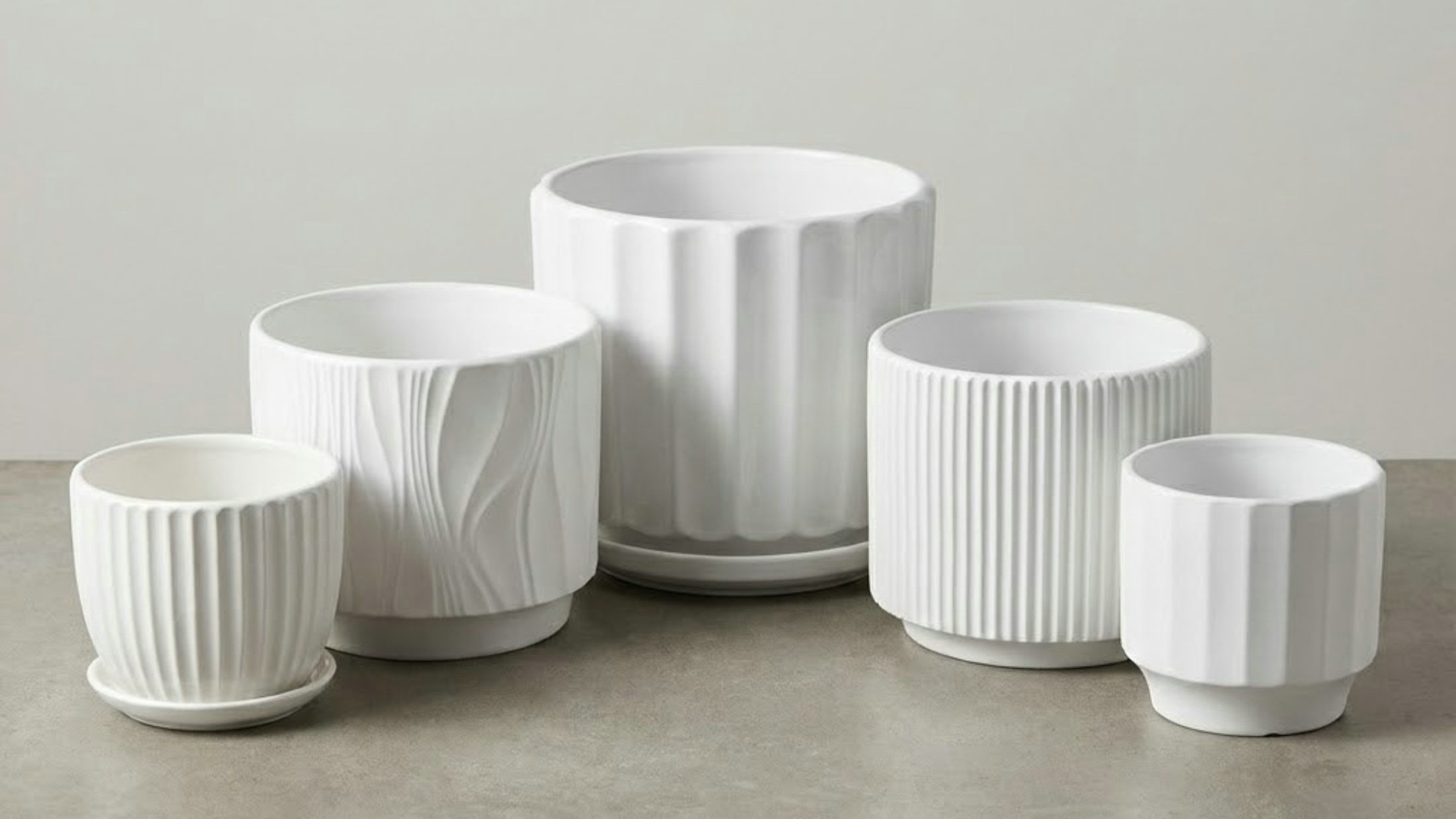
1. Describe the intended use
State whether the piece will hold a nursery pot, be planted directly or serve as a decorative cover. Describe the intended setting and any handling or water-containment requirements. Identify expectations that need to be reviewed for the specific product.
2. Specify dimensions and fit
Provide overall width or diameter and height, with units. Where fit matters, include the opening dimensions, usable interior depth and the dimensions of the item that must fit inside. Add a drawing or marked photograph for shaped or tapered pieces. Identify critical dimensions and request confirmation of achievable tolerances and sample-fit checks; do not assume a nominal size guarantees fit.
3. Provide a finish or appearance reference
Share a product link, clear photographs, drawing, physical sample or color reference. Describe the desired color, texture and glaze or decorative effect. Note which details matter most and which may be adjusted. References communicate direction; finish feasibility and acceptable appearance variation must be agreed for the program.
4. Identify drainage and saucer requirements
State whether drainage holes are required and describe any requested location or configuration. Specify whether a saucer or other component is required, included or quoted separately. If water containment matters, describe the intended use and ask what verification is appropriate. A glazed appearance alone does not confirm waterproof performance.
5. Break down quantities by design, size and color
List the requested quantity for each design, size and color combination, plus the overall program quantity. Identify sets, assortments or separate items and indicate whether quantities are estimates or confirmed requirements. This breakdown supports review of program-specific minimum order quantities and pricing.
6. Describe packaging and the distribution channel
Explain whether the product is intended for retail shelves, a grower program, e-commerce or another channel. Include requested unit protection, inner and outer packs, case quantities, labels, barcodes and display requirements. Share any buyer-required packaging specifications or verification criteria for review. Packaging and any testing must be agreed for the actual product and distribution route.
7. Give the delivery destination
Provide the destination country, city and postal code, and identify the receiving location type. Include known receiving restrictions, pallet requirements or staged deliveries. State any requested shipment terms so the quotation can identify what is included and what still needs confirmation.
8. State the required receiving date
Give the date the goods need to be received, rather than only a launch or selling date. Explain any retail event, plant-program dependency or flexibility. Sample approval, packaging decisions, production and transport need to be reviewed together before a schedule is confirmed.
9. Flag custom forms and tooling questions
For a new or modified shape, provide drawings, dimensions and reference pieces, and identify the changes you need. If you have existing tooling, describe it and confirm your authority to use it. Ask whether new molds or tooling are needed and request clarification of any charges, ownership, storage, reuse conditions and approval steps. These details require program-specific agreement.
Before you send your RFQ
Group the details by design, attach clearly named references and mark open questions. Include a contact person and identify any requirements that cannot change.
MOQ, tooling requirements, pricing and timing depend on the specific product and program. Quantities by size and color, finish development, packaging and sample revisions are inputs to that review. A reference image or requested receiving date does not establish feasibility, availability or a delivery commitment. Confirm specifications, samples and commercial terms before production.
Put your brief to work
Use your checklist to start a discussion about a custom or bulk ceramic planter program.
Review ceramic planter developmentIf you are evaluating selected existing collections rather than developing a custom program, review the ceramic wholesale purchasing options. Availability and terms depend on the selected collection and purchasing route.